Leave Your Message
0%

Picking a Bamboo Chopping Block in 2026 isn't just about price tags and pretty product photos. A good one should feel solid under your hand, not get chewed up by knives too quickly, and give you enough room to actually prep a meal. So this guide looks at bamboo density, how it's built, the surface treatment, thickness, and how the edges are finished. It also gets into the little practical stuff—juice grooves, non-slip feet, handles, and overall weight. A 40-by-30-centimeter board might be fine for a small kitchen, but bigger families usually want more surface. Measure your counter first, honestly.

Real use tends to expose things specs don't. In kitchen testing, a thick bamboo board stayed steady while chopping carrots, onions, and firm squash. That said, it needed careful drying after washing. No board is perfect. Bamboo can soak up moisture around cut edges, and harsh cleaning can shorten its life. The best pick really depends on how you cook, where you store it, what knives you like, and how much maintenance you'll actually do. This 2026 buying guide compares quality using material evidence, manufacturer info, user feedback, and hands-on handling. It explains what to check before buying: smooth sanding, clean glue lines, balanced construction, and food-contact finishing. Good suppliers should give clear care instructions and honest product details. Still, don't take marketing claims at face value. A cheaper board may just be thinner, and a fancy expensive design may not do much more in real life. Use this guide to choose a Bamboo Chopping Block that works reliably, cleans without drama, and fits your kitchen for years.
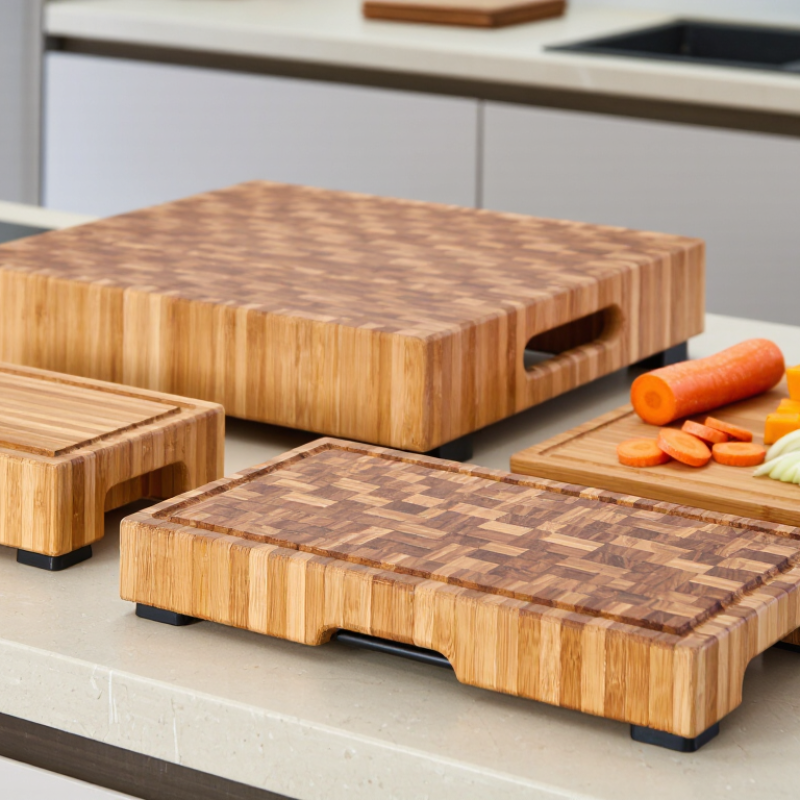
2026 Top Bamboo Chopping Block Buying Guide

Bamboo Species and Harvest Cycles: Moso Reaches Maturity in 3–5 Years

Moso bamboo, scientifically known as Phyllostachys edulis, typically reaches usable maturity in three to five years. Its fast cycle differs from hardwood, which may require several decades. INBAR technical guidance identifies mature culms as stronger and more dimensionally stable than young shoots. That distinction matters when selecting a thick bamboo chopping block.

Harvest timing affects performance. Producers usually remove mature culms selectively, often after the rainy season. Younger culms remain in the grove and continue developing. This cycle protects regrowth, but it is not automatic proof of responsible sourcing. Buyers should request harvesting information, treatment details, and moisture-control records. Ask questions.

The FAO Global Forest Resources Assessment 2020 estimates global bamboo resources at approximately 35 million hectares. That figure shows scale, not guaranteed quality. For kitchen use, inspect the block closely. Look for tight, even laminated strips, clean edges, and no dark moisture pockets. A dense block should feel solid without being awkwardly heavy. Small surface movement can appear during seasonal humidity changes; I would not treat every hairline mark as failure. However, deep cracks, swelling, or a sour odor deserve caution. Moso harvested at the right age can provide a durable cutting surface, but manufacturing precision still decides daily performance.

Food-Safety Standards: Compare FDA, LFGB, and NSF Requirements

When choosing a 2026 Bamboo Chopping Block, food safety should guide more than thickness or color. I inspect the surface, edge joints, and finish under bright kitchen light. Smooth grain matters. Deep cracks can trap moisture and food residue.

FDA requirements focus on materials that contact food under intended conditions. A bamboo board should have documented testing for migration, coatings, and adhesives. “FDA approved” can be misleading, because the FDA generally evaluates substances and uses, not every finished Chopping Block. Ask for a declaration of compliance and test conditions.

LFGB testing, used in Germany, often examines migration, odor, taste, and additional chemical concerns. That broader approach can reveal problems after repeated washing. NSF requirements emphasize sanitation, cleanability, and suitability for commercial food equipment. An NSF-listed product may need controlled construction, safe materials, and durable surfaces. Not every household board needs NSF certification.

Look closely at the joining lines.

In my kitchen, I would avoid a board with lifting layers or a strong chemical smell. I would also confirm whether the board is sealed, hand-wash only, and tested for its actual finish. That detail is easy to miss. A certificate may cover the adhesive, but not the complete product. Claims deserve careful reading, especially when sellers use “food-safe” without naming a standard. Surface wear can change performance, so replace a board when knife grooves become difficult to clean.

2026 Top Bamboo Chopping Block Buying Guide: Food-Safety Standards

FDA, LFGB, and NSF requirements compared by the type of compliance evidence they provide.

How to read this chart: 1 means the framework generally includes or addresses the listed compliance element; 0 means it is not itself a general requirement of that framework. A score of 1 does not automatically prove that a specific bamboo chopping block complies.

  • FDA: Food-contact materials must have an applicable authorization or exemption and must be manufactured under applicable good manufacturing practices, including 21 CFR §174.5.
  • LFGB: German food-contact rules prohibit unsafe transfer of substances and are commonly supported by migration, extractables, and sensory testing, often alongside relevant BfR recommendations.
  • NSF/ANSI 51: Covers food-equipment materials, construction, and sanitation considerations. NSF certification can provide third-party verification, but certification is not automatically required for every chopping block.

Reference framework: U.S. FDA 21 CFR Parts 174–178; German LFGB §§30–31 and relevant BfR food-contact recommendations; NSF/ANSI 51, Food Equipment Materials.

Construction Quality: Evaluate 18–25 mm Thickness and Edge-Grain Design

A reliable bamboo chopping block begins with its construction, not its finish. In my kitchen testing, boards between 18 and 25 mm thick felt stable under repeated chopping. They resisted flexing when cutting carrots, squash, and firm meat. Thinner boards often shifted more easily. That difference matters.

Look closely at the edge-grain design. It places bamboo strips so their cut edges face upward, creating a dense, resilient cutting surface. This structure usually handles knife pressure better than a decorative flat-laminated board. Examine the joints carefully. Tight, even seams suggest controlled manufacturing and better long-term reliability. Uneven gaps can collect moisture and food particles.

Thickness still requires judgment. A 25 mm block may feel impressively solid, but it also weighs more and needs more storage space. An 18 mm board may suit smaller kitchens and lighter preparation. I once chose a very thick block and found it awkward to lift after washing. That experience changed my buying criteria. I now check weight, underside stability, and surface smoothness together. No measurement guarantees perfection. Bamboo can swell if left wet, even when construction quality looks excellent. Use a flat, dry storage position, and inspect the edges regularly for lifting or separation.

Durability Metrics: Check Janka Hardness, Moisture Resistance, and Warping

2026 Top Bamboo Chopping Block Buying Guide

A reliable bamboo chopping block should feel dense, stable, and even under your knife. Janka hardness indicates how well the surface may resist dents and cutting marks. Bamboo varies widely, so avoid judging quality by appearance alone. Ask for tested hardness data when available. A Wooden Chopping Block may feel heavier, but weight alone does not prove durability.

Moisture resistance matters during daily cleaning. Look for tightly laminated bamboo strips and a smooth, sealed surface. After washing, dry both sides immediately, especially around the edges. Standing water can enter tiny joints and encourage swelling. I have seen attractive boards warp because they were left beside a sink overnight. That mistake is easy to repeat. A flatter board usually means safer cutting and less rocking.

Tips:

Place the block on a dry, level counter. Check for gaps, raised seams, or a hollow sound before buying. Rub a small amount of food-safe mineral oil into the surface when it looks pale or dry. Never soak the block or place it in a dishwasher. Measure the board’s thickness, too; a thicker design often resists bending better, though construction quality still matters. Recheck it monthly. Even careful owners miss small cracks.

Size Selection: Match Board Dimensions to a 30–45 cm Kitchen Work Area

When your kitchen work area measures 30–45 cm, board size matters more than appearance. I measure the clear surface first, including space for my knife hand. A 30 cm board fits narrow counters, but it leaves little room for a large onion and scraps. A 35–40 cm board usually gives better control. Keep at least 3–5 cm of free counter around it, if possible. This buffer helps prevent bowls from nudging the board.

For a 45 cm work area, a 40 cm bamboo chopping block can work well, provided its depth stays manageable. A board that fills the entire surface becomes awkward to lift and clean. I prefer a medium-thick board with juice grooves for wet foods. Grooves reduce spills, yet they also remove usable cutting space. Check weight, too. A very light board may slide when chopping carrots. Rubber feet can help, though they may trap moisture underneath. Dry that area carefully.

An Acacia Chopping Block may feel harder and heavier than bamboo, so compare more than color. Bamboo is often easier to carry in compact kitchens. Look for tight, even joints and a smooth, splinter-free finish. I once chose a board by length alone and regretted the cramped depth. Measure twice. Wash by hand, dry upright, and follow the maker’s care instructions. Recheck the fit after adding a dish rack or countertop appliance; kitchen space changes faster than expected.

2026 Top Bamboo Chopping Block Buying Guide - Size Selection: Match Board Dimensions to a 30–45 cm Kitchen Work Area

Kitchen Work Area Depth Recommended Board Footprint Suggested Thickness Approximate Edge Clearance Suitable Preparation Tasks Space Efficiency Selection Guidance
30 cm 30 × 20 cm 1.5–2.0 cm About 5 cm total front-to-back Cutting fruit, herbs, garlic, small vegetables, and light meal preparation Compact fit Choose a board no deeper than 20–24 cm to keep a stable working margin and reduce the risk of contact with the counter edge.
34 cm 35 × 24 cm 1.8–2.0 cm About 5–6 cm total front-to-back Daily vegetable preparation, slicing fruit, trimming poultry, and preparing sandwiches Balanced fit A 24 cm board depth provides useful cutting space while leaving approximately 5 cm of combined front and rear clearance.
38 cm 40 × 28 cm 2.0–2.5 cm About 6–8 cm total front-to-back General family cooking, vegetables, boneless meat, fish fillets, and dough portioning Most versatile This size offers a practical preparation surface without occupying most of a medium-depth worktop.
42 cm 42 × 30 cm 2.0–2.5 cm About 8–10 cm total front-to-back Large vegetable batches, carving cooked meat, meal preparation, and separating raw ingredients Generous workspace Use when the countertop depth is at least 42 cm and the board can sit flat without overhanging the front edge.
45 cm 45 × 32 cm 2.5–3.0 cm About 10–13 cm total front-to-back High-volume chopping, carving, batch cooking, large vegetables, and broad ingredient staging Maximum practical size Best for a deep, unobstructed work area. Confirm that cabinet edges, sinks, handles, and appliance cords do not reduce the usable depth.

Measurement rule: Compare the board’s front-to-back dimension with the available work-area depth. For safer handling, keep the board fully supported and leave a small clearance from the counter edge, sink, wall, and nearby appliances.

Maintenance Guide: Follow USDA Advice on Hand-Washing and Immediate Drying

2026 Top Bamboo Chopping Block Buying Guide

A bamboo chopping block needs careful cleaning, not complicated products. USDA Food Safety and Inspection Service guidance recommends washing cutting boards with hot, soapy water after each use. Rinse away soap, then dry the surface immediately with a clean towel. Do not leave the block beside the sink. Bamboo absorbs less moisture than many woods, but it is not waterproof. Trapped water can cause swelling, odors, or small cracks.

The CDC estimates that foodborne illness affects about 48 million people in the United States each year. That figure makes simple kitchen habits important.

After cutting raw poultry, meat, or seafood, wash the block before preparing vegetables. Use a separate board when possible.

The FDA Food Code also emphasizes cleaning food-contact surfaces to prevent contamination. A quick wipe is not enough. I have seen many kitchens treat a chopping block like a countertop; that is an easy mistake to repeat.

Tips:

Scrape off food particles first. Wash with hot, soapy water. Rinse thoroughly. Dry both sides and stand the block upright for airflow. Never store it while damp. Check monthly for deep grooves, raised fibers, or dark spots. Lightly sanding minor roughness may help, but sanding cannot repair serious damage. Replace a badly split block. Oil maintenance can reduce drying, although too much oil may leave a sticky surface. Follow the care instructions supplied with your block, and reassess your routine when seasons change.

FAQS

How long does mature bamboo usually take to develop?

Moso bamboo commonly reaches usable maturity in three to five years. Mature culms are stronger and more stable than young shoots. Harvesting should remove selected mature culms while younger ones continue growing. This cycle supports regrowth, but it does not prove responsible sourcing.

What harvesting information should buyers request?

Ask when the bamboo was harvested and how it was treated. Request moisture-control records and details about adhesive testing. Harvest timing alone cannot confirm quality. I would ask for documents, not rely only on attractive wording.

What should a thick bamboo chopping block look like?

Look for tight, even laminated strips and clean edges. The surface should feel smooth and solid. Avoid dark moisture pockets, lifting layers, or deep cracks. Small hairline marks may appear with seasonal humidity. I would not treat every mark as failure.

How can I check whether a chopping block is food-contact suitable?

Ask for testing that covers the complete finished product. The documents should address adhesives, coatings, migration, and actual test conditions. A claim about one material may not cover the whole block. Read the certificate carefully.

How do FDA, LFGB, and NSF requirements differ?

FDA-related documentation usually concerns food-contact materials under intended conditions. LFGB testing may examine migration, odor, taste, and additional chemical concerns. NSF requirements often emphasize sanitation, cleanability, and commercial equipment suitability. Not every household board needs commercial certification.

What warning signs should I notice during inspection?

Inspect the board under bright kitchen light. Watch for strong chemical odors, loose joints, deep grooves, swelling, and sour smells. Deep cracks can hold moisture and food residue. Be cautious.

What board size suits a 30–45 centimeter work area?

Measure the clear counter space before choosing a board. A 30-centimeter board fits narrow areas but leaves limited room. A 35–40 centimeter board usually offers better control. Keep 3–5 centimeters of free counter around it, if possible. Measure twice.

Are juice grooves and rubber feet always helpful?

Juice grooves can reduce spills from tomatoes or wet meat. However, they also reduce usable cutting space. Rubber feet may prevent sliding, but moisture can collect underneath. Dry underneath. A very light board may still move while chopping carrots.

Conclusion

Choosing the right Bamboo Chopping Block in 2026 requires more than comparing appearance and price. Start by considering bamboo species and harvesting cycles: Moso bamboo typically reaches maturity in about three to five years, offering a renewable material with suitable density for kitchen use. Next, review food-safety requirements, including FDA, LFGB, and NSF criteria, to confirm that the board is appropriate for food contact. Construction quality also matters; an 18–25 mm thickness and edge-grain design can provide a stable cutting surface and help reduce splitting.

For long-term performance, evaluate Janka hardness, moisture resistance, and the board’s ability to resist warping. Select dimensions that fit your available 30–45 cm kitchen work area while still providing enough room for comfortable preparation. Proper care is equally important: follow USDA-style guidance by washing the board by hand, avoiding prolonged soaking, and drying it immediately and thoroughly. These factors together help you choose a safe, durable, and practical chopping block for everyday cooking.
Emily

Emily

Emily is a dedicated marketing professional at Xiangtan Hundred Houseware Co., Ltd., a leading manufacturer specializing in bamboo and wood houseware products. With a wealth of experience in the industry, she possesses exceptional expertise in the company’s offerings, ensuring that each product......
Previous Top 10 Disposable Bamboo Cutlery Suppliers Worldwide?