Bamboo cooking utensils are definitely getting some attention from wholesale buyers on the hunt for practical, plant-based kitchenware. But hey, just because the material sounds great doesn't automatically mean the final product is a slam dunk. You still need to check the finish, see if the handles feel comfortable, look at the packaging, and make sure samples line up with what you get in repeat orders.
So here's the thing: the International Bamboo and Rattan Organisation did a global assessment back in 2020, and they estimate bamboo forests cover about 35 million hectares worldwide. That number is about the resource, though, not the size of the cooking-utensil market. I honestly wouldn't read too much into it as proof of demand or product performance. When you're actually deciding what to buy, a physical sample and the supplier's documentation matter way more than broad market claims. You know, when you're checking out utensils, really pay attention to how smooth the sanding is—run your fingers along the edges to see if they feel comfortable in your hand. And don't forget to look at whether the supplier actually tells you what material it's made of and how to care for it. That part matters a lot.
You know, it’s the little things that really count. Take a polished spoon—it might look sleek, but the thickness can actually differ from one production batch to the next. And a nice product photo? That won’t tell you whether it’ll hold up over time. I came across bamboo researcher Walter Liese, who’s a big deal in bamboo science, but I couldn’t track down a published quote from him specifically about bamboo cooking utensils. So instead of making up an expert quote, I decided to stick with what I could verify and practical things you can actually check when choosing. We’re going to look at the top options for wholesale buyers—covering things like construction, finish, product range, and how transparent suppliers are. And here’s the thing: the best pick isn’t necessarily the cheapest or the flashiest. It’s the one you can actually size up, justify to your team, and reorder without second-guessing yourself.
Understanding Bamboo Cooking Utensils and Their Uses
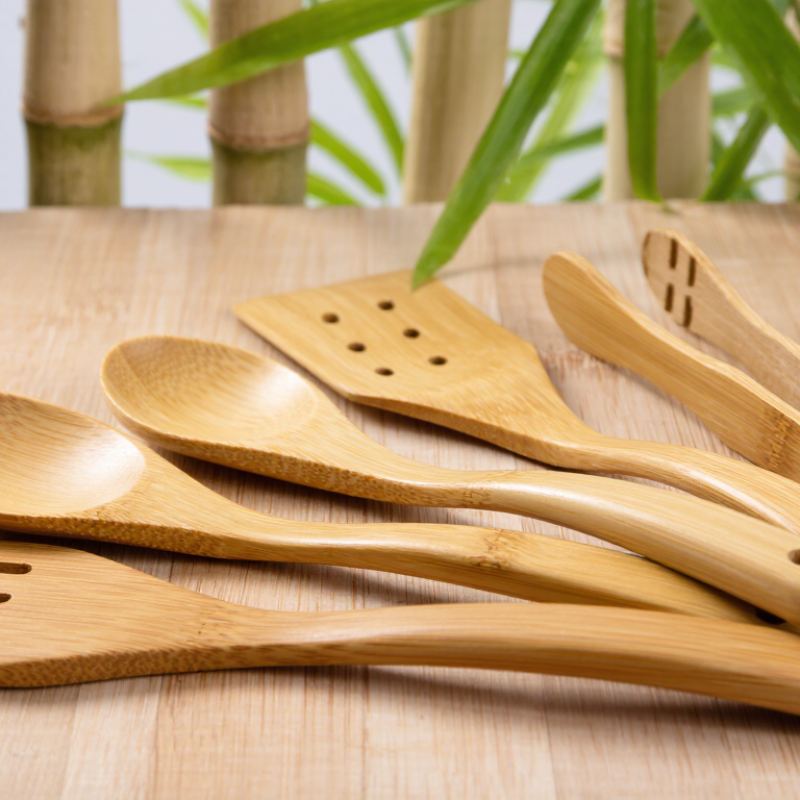
Bamboo Cooking Utensils are commonly used for stirring, turning, serving, and scraping food from cookware. Their smooth, lightweight handles feel comfortable during everyday meal preparation. A bamboo spoon works well for sauces and soups, while a flat spatula can turn vegetables or eggs. Rounded edges are useful for reaching the corners of a pan. They are gentle on many coated surfaces, though users should still check the cookware maker’s care guidance.
Bamboo is a natural material, so color, grain, and weight can vary slightly between pieces. That variation is normal, but it matters when wholesale buyers compare samples with larger orders. Inspect the finish, handle balance, and joints, and check that surfaces feel smooth without splinters. Light, but not indestructible. Prolonged soaking and high heat can contribute to cracking or warping, so hand washing and prompt drying are practical care habits. These Cooking Utensils suit routine kitchen tasks, but they are not ideal for every job; a thin bamboo spatula may flex under heavy food. A sample can reveal more than a product description.
2026 Top Bamboo Cooking Utensils for Wholesale Buyers
Typical lengths of common bamboo cooking utensils. Dimensions are approximate; actual sizes vary by design and supplier.
Spoons, spatulas, and turners are commonly around 12 inches long, while tongs and chopsticks are often shorter. Confirm dimensions and specifications with suppliers when planning wholesale assortments.
Key Materials and Construction Features
For wholesale buyers, bamboo utensils should be assessed by material consistency and construction, not appearance alone. Look for dense, well-seasoned bamboo with straight grain and no soft spots, cracks, or dark moisture marks. Ask suppliers how the material is dried and whether pieces are checked for warping. Small differences matter: a spoon that feels smooth when dry may raise rough fibers after repeated washing.
Construction details affect handling and durability. Check that handles have rounded edges, comfortable thickness, and no splinters around drilled holes or joints. For laminated pieces, ask what adhesive is used and request documentation for food-contact suitability. Finishes should be clearly identified; an unspecified coating is a reason to pause. Keep samples in warm, damp conditions, then inspect for swelling, odor, loose layers, and roughness. Simple tests help.
Bulk Cooking Utensils should also arrive with consistent dimensions and finish across cartons. A few uneven pieces can slow packing or trigger returns. Yet bamboo is not maintenance-free. It can stain, dry out, or split if left soaking, and even careful production cannot prevent every defect. Check a representative sample from each production lot, and record acceptable tolerances before placing a large order.
Common Utensil Types for Wholesale Buyers
2026 Top Bamboo Cooking Utensils for Wholesale Buyers?
Common Utensil Types for Wholesale Buyers
Wholesale assortments often begin with everyday tools: cooking spoons, spatulas, turners, and slotted spoons. A broad spatula works well for folding vegetables, while a narrow turner slides more easily beneath pancakes or fillets. Cooking spoons suit stirring sauces and soups. Slotted spoons let liquid drain before serving.
Tongs, rice paddles, and serving sets add variety. Bamboo tongs can handle salad or cooked vegetables, but check that the arms open smoothly and grip without splintering. Rice paddles have wide, curved heads that lift rice with less crushing. Salad servers are often sold as pairs. For bulk orders, compare handle length, head shape, edge smoothness, and finish across samples. Small variations can occur; discuss them rather than overlooking them.
Tips: Request samples from the production range, not only a display piece. Check for loose fibers, uneven edges, or strong odors. Confirm care instructions and packaging details before approving quantities. Don’t overbuy one style. Buyer preferences differ.
Quality, Safety, and Sustainability Standards
For 2026 wholesale purchasing, bamboo cooking utensils should meet clear quality and safety requirements. Check that handles feel smooth, edges are rounded, and joints show no cracks or splinters. Ask suppliers for material specifications and documentation confirming the finish is suitable for food contact. Requirements vary by market, so confirm which tests apply to your destination. A polished sample is not enough. Request batch records or relevant test reports before placing a large order.
Tips: Rub a clean cloth over each utensil; loose fibers may signal poor finishing. Ask how moisture and coating quality are checked. Small flaws matter when they appear across thousands of pieces.
Sustainability claims also deserve evidence. Look for traceable bamboo sourcing, responsible harvesting information, and realistic details about packaging and production waste. Bamboo can grow quickly, but that alone does not prove a product has a low impact. Compare useful product-life information with similar Wooden Cooking Utensils, including care instructions and expected durability. Some variation in color may be natural, though inconsistent dimensions can complicate packing and retail displays. Keep a written sample standard, and revisit it after the first shipment; specifications can look fine on paper and still need improvement in practice.
How to Evaluate Suppliers and Product Samples
Wholesale buyers should assess the supplier before judging the bamboo spoon in a sample box.
INBAR’s Global Assessment of Bamboo and Rattan (2020) estimates about 35 million hectares of bamboo forest worldwide. That figure describes the resource, not the quality or traceability of any finished utensil. Ask suppliers to identify the bamboo species, document its origin, and explain how batches are tracked. Photos are not enough.
Inspect several pieces, not just one. Check the edges for splinters, the handle for cracks, and the surface for rough patches or a strong coating odor. Test samples with hot food and routine washing, then look for swelling, color transfer, or loose fibers.
Food Safe Cooking Utensils
need evidence, not a broad supplier claim: request relevant independent laboratory reports for the intended market and use. Compare samples from different cartons, too. Small flaws matter. I would still treat a single sample as weak evidence; production runs can vary. Ask how the supplier records inspections, handles rejected goods, and controls finish consistency before placing a wholesale order.
Wholesale Pricing, Packaging, and Order Planning
Wholesale pricing for bamboo cooking utensils depends on more than the unit cost. Ask suppliers to quote clear quantity tiers, such as 500, 1,000, and 3,000 sets. Confirm whether prices include sanding, food-contact finish, individual sleeves, and export cartons. A wooden spatula with a smooth handle may cost more than a basic spoon. Request a sample before approving production, and check its dimensions, finish, and feel in hand. Small details matter.
Packaging affects both protection and freight space. Compare paper sleeves, simple sets of three, and gift-ready boxes; each changes carton size and packing labor. Ask for the packed carton’s dimensions and gross weight, not just the product measurements. Check that utensils cannot rub against each other during transit. Even a neat quote can omit inner packaging, so review every line. That happens.
Build the order schedule backward from your warehouse delivery date. Allow time for sample approval, production, packing, and shipping, then keep a practical buffer for delays. Confirm how many pieces fit in each carton and whether mixed styles are available within one order. For a first purchase, a smaller trial quantity can reveal packaging or finish issues before a larger commitment. It may feel cautious, but reordering is easier when the first shipment gives you useful data.
Conclusion
Bamboo Cooking Utensils offer wholesale buyers a practical combination of everyday usefulness, natural appearance, and material efficiency. Common options include spoons, spatulas, turners, and serving tools, with designs suited to different cooking tasks. When assessing products, consider the type and quality of bamboo, construction, smooth finishes, sturdy handles, and how well each utensil is shaped for comfortable use.
Reliable purchasing also depends on careful checks beyond appearance. Review product samples for workmanship, durability, food-contact safety information, and sustainability claims, and ask suppliers for clear specifications. Compare pricing alongside packaging choices, minimum order quantities, production timelines, and shipping plans. Thoughtful evaluation helps buyers select suitable products, manage inventory, and plan wholesale orders with greater confidence.