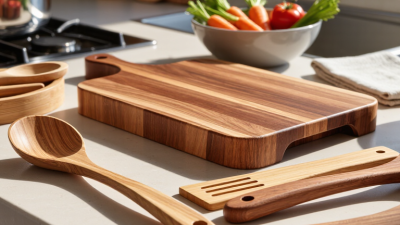
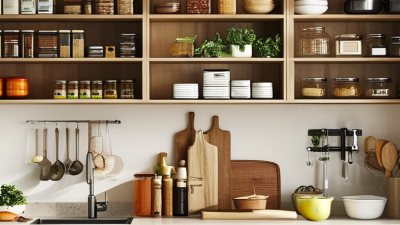
So, this 2026 guide to the top wooden kitchen tools for global buyers? It's really all about how practical design, responsible sourcing, and how they actually perform in your daily cooking routine come together to sway what people end up buying. And hey, wooden kitchen tools are still a hit—they just bring that cozy, warm vibe and make cooking feel a bit more peaceful, you know? But honestly, looks alone won't cut it anymore. You know, even a really nice spoon can eventually start to split, get stained, or just feel weird in your hand after you've washed it a bunch of times.
Jim Leahy, who runs Earlywood Designs, once said something that really sticks with me: “A good kitchen tool should fit right into the cook’s rhythm.” That notion matters to a lot of folks—importers, retailers, hospitality folks, and home cooks alike. When picking out a tool, you've got to think about the wood species, how the grain runs, whether the handle feels balanced, if the surface is smooth, and what kind of finish touches your food. And don't overlook moisture control, how sturdy the packaging is, and whether you can trace the supplier. It's the little things that make a big difference.
You know, looking at a product in real use—not just the shiny photos—tells you a whole lot more. Try wetting your hands and rubbing the handle. Does it feel too sharp at the edges? Or leave it near some steam and come back later to see what happens. Honestly, when things don't come out perfect, that's actually a lesson for the buyer. Even a really well-made item might need clearer instructions on how to care for it. And that's something worth pointing out, not hiding away.
So, I've been digging into the top wooden kitchen tools folks are eyeing for 2026 on the global stage. Honestly, it's not just about looks—you've gotta think about how long they'll last, how easy they are to use, and what kind of upkeep they need. Plus, everyone's throwing around 'sustainability' these days, so it's worth checking those claims too. And of course, you want a supplier who can keep their quality consistent, no matter what. Now, each wood has its own vibe: bamboo's light and eco-friendly, beech is sturdy and classic, maple has that smooth finish, olive wood brings character, and acacia offers a rich, durable option. But here's the thing—if you're selling globally, you can't ignore the paperwork and packaging specs for different regions. At the end of the day, a good supplier will be upfront about what their materials are and how they're sourced. That's a game-changer. They don't just throw around buzzwords like "natural" or "premium" — you know, the kind of vague promises that sound good but mean nothing. What really sets the best apart is that they're specific: clear specs, solid craftsmanship, and stuff that actually makes a difference in your daily life.
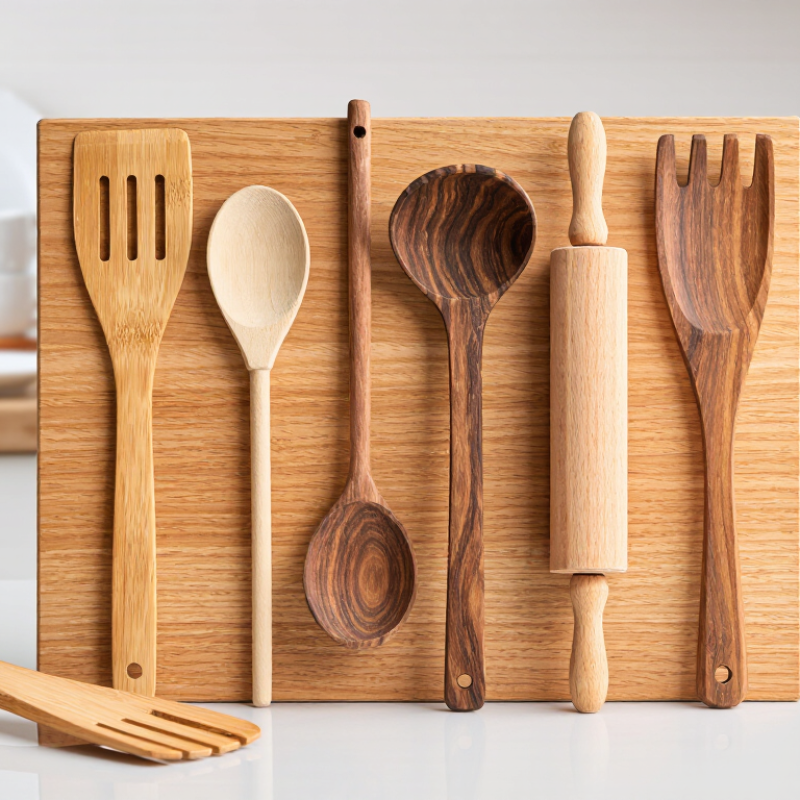
What Defines a High-Quality Wooden Kitchen Tool in 2026
High-quality wooden Cooking Tools in 2026 begin with carefully selected timber. Dense hardwoods with tight, even grain resist splitting and deep scratches. The surface should feel smooth, not slippery. Small fibers should not rise after washing.
Experienced buyers should inspect moisture control, edge shaping, and joint strength. Poorly dried wood may warp beside a hot stove. A reliable supplier can provide wood species, origin, batch details, and food-contact safety documentation. These records matter for international purchasing. They also reveal whether quality claims are measurable.
Look closely at the finish. A suitable coating should be clearly identified for food contact and applied evenly. Strong chemical odors are warning signs. The tool should survive repeated hand washing without becoming rough. Still, no wooden utensil stays perfect forever. I have seen attractive pieces darken around the handle after months of use. That does not always mean failure, but it deserves investigation. Buyers should also check packaging, carton strength, and storage instructions before shipment. A beautiful tool can arrive cracked when protection is weak. Careful testing, honest specifications, and responsive inspection create more trust than polished photographs.
2026 Top Wooden Kitchen Tools for Global Buyers
What Defines a High-Quality Wooden Kitchen Tool in 2026?
Dense, hard-wearing woods generally offer better resistance to dents, abrasion, and repeated handling. The chart compares approximate typical air-dry density and Janka hardness values for commonly used tool woods. Material performance should be evaluated together with food-contact safety, smooth finishing, stable moisture control, and precise workmanship.
Values are approximate typical published figures and can vary by species, growing conditions, moisture content, and test method.
Leading Wood Types for Durable Kitchen Utensils
For global buyers, wood species strongly influences utensil durability and user comfort. Hard maple is dense, stable, and suitable for daily stirring. The USDA Forest Products Laboratory’s Wood Handbook reports oven-dry density near 705 kg/m³ for hard maple. Beech measures around 680 kg/m³, while black walnut is close to 610 kg/m³. That difference matters. Denser fibers usually resist knife marks, but density alone cannot guarantee durability. Grain direction, kiln drying, and surface treatment deserve equal attention.
Beech offers a smooth texture and reliable impact resistance. Maple feels firm and stays relatively neutral around food aromas. Walnut adds visual warmth, although softer areas may show scratches sooner. Olive wood looks distinctive, yet its irregular grain can split around thin edges. The USDA handbook notes that indoor wood commonly equilibrates near 6–8% moisture content. Poorly dried tools may warp beside a hot sink. For Pizza Oven Tools, choose long-grain handles and avoid strongly aromatic or resinous species. No wood is perfect.
Tips: Ask suppliers for species, moisture, finish, and origin records. Prefer food-contact-rated coatings and crack-free surfaces. FAO’s State of the World’s Forests 2022 reports that forests cover 31% of global land. That figure does not prove responsible sourcing. Request traceability documents. Test samples after washing, drying, and repeated stirring. Real kitchens are harsher than catalogs.
Design Trends Shaping Global Wooden Kitchenware
2026 Top Wooden Kitchen Tools for Global Buyers
Design Trends Shaping Global Wooden Kitchenware
Wooden kitchen tools are moving beyond rustic decoration. Buyers now seek lighter forms, repairable parts, and clear material origins. PwC’s Voice of the Consumer Survey 2024 found that 46% of consumers buy more sustainable products. It also reported an average willingness to pay 9.7% more. This supports designs that show real durability, not empty green language.
Current collections favor ash, beech, bamboo, and responsibly sourced rubberwood. Rounded handles improve grip, while shallow spoons suit modern cookware. Matte finishes feel natural, but excessive coating can hide scratches and complicate maintenance. I have found that small details matter: a hanging hole, smooth edges, and replaceable silicone parts can reduce returns. Still, wood is not automatically sustainable. Poor drying causes cracks, and vague sourcing weakens buyer confidence. The industry needs better proof.
Tips: Ask suppliers for species details, moisture-control procedures, and origin documents. Test handles with wet hands. Check whether food-contact finishes meet the destination market’s requirements. Use close-up photos to show grain, joints, and surface quality.
The Global Forest Resources Assessment 2020 reports that forests cover about 31% of global land area. That figure demands careful sourcing. For 2026, stronger designs will combine natural texture with measurable performance, compact packaging, and honest care instructions. Some buyers may prefer imperfect grain. That preference can reduce over-processing, but only when defects do not affect safety or strength.
2026 Top Wooden Kitchen Tools for Global Buyers - Design Trends Shaping Global Wooden Kitchenware
Typical product specifications and design considerations for international sourcing. Dimensions are common commercial ranges and may vary by manufacturer.
| Product Category |
Typical Size |
Suitable Wood Options |
Core Buyer Value |
2026 Design Direction |
Key Quality Checks |
| Cooking Spoon |
28–35 cm length |
Beech, maple, acacia |
Gentle on non-stick cookware; suitable for stirring and serving |
Rounded bowls, slim ergonomic handles, hanging holes |
Smooth sanding, no splinters, stable handle-to-bowl joint |
| Slotted Turner |
30–36 cm length; blade width 6–9 cm |
Beech, maple, rubberwood |
Lifts fried foods and baked items while allowing oil to drain |
Low-profile edges and balanced, lightweight construction |
Uniform slots, flexible but non-brittle blade, food-contact finish |
| Wooden Tongs |
25–30 cm length |
Bamboo, beech, acacia |
Useful for salads, pasta and serving; protects coated cookware |
Scalloped gripping ends and one-piece or concealed-joint designs |
Consistent spring action, secure pivot, rounded gripping surfaces |
| Rolling Pin |
35–50 cm length; 4.5–7 cm diameter |
Maple, beech, rubberwood |
Low-maintenance tool for pastry, noodles and dough shaping |
Tapered French-style profiles and measurement guides |
Straight axis, smooth cylindrical surface, no resin pockets or cracks |
| Cutting Board |
30–45 × 20–30 cm; 1.5–3 cm thick |
Acacia, maple, beech, rubberwood |
Durable food-preparation surface with natural visual appeal |
Reversible boards, juice grooves, integrated handles and serveware styling |
Flatness, edge sealing, absence of open cracks, moisture resistance |
| Mortar and Pestle |
Mortar diameter 10–16 cm; pestle 12–18 cm |
Acacia, olive wood, rubberwood |
Suitable for herbs, spices, garlic and small-batch seasoning |
Compact forms, textured exterior, natural two-tone grain |
Stable base, comfortable pestle grip, smooth interior without loose fibers |
| Salad Servers |
25–32 cm length |
Acacia, beech, olive wood |
Adds a coordinated natural accent to dining and buffet settings |
Minimal silhouettes, contrasting grain, gift-ready paired sets |
Matching pair dimensions, balanced weight, clean polished edges |
| Utensil Holder |
10–14 cm diameter; 12–18 cm height |
Bamboo, acacia, rubberwood |
Organizes tools while extending a coordinated kitchen collection |
Drainage bases, modular sizes, vertical ribbing and soft curves |
Stable footprint, ventilated or drainable base, odor-free finish |
Material Trend
Buyers increasingly favor visible natural grain, renewable bamboo and responsibly sourced hardwood options.
Functional Trend
Multi-use tools, reversible boards, compact storage and dishwasher-safe alternatives are practical design priorities.
Packaging Trend
Plastic-reduced packaging, care instructions and gift-ready coordinated sets support global retail presentation.
How Global Buyers Can Evaluate Suppliers and Products
2026 Top Wooden Kitchen Tools for Global Buyers
Global buyers should evaluate the supplier before admiring the product. Request a physical sample, not only polished catalog images. Check the handle for cracks, rough fibers, and uneven sanding. Place the tool on a flat table. It should not wobble. Ask about wood species, moisture control, finishing oils, and production batches. A reliable supplier can explain each step clearly and provide consistent records.
Tips: Compare three samples from different batches. Wash one repeatedly. Inspect swelling, odor, color changes, and loose joints. Ask for food-contact test documents that match your destination market. Packaging also matters. A wet carton can damage
Bamboo Cooking Tools
before arrival. Confirm carton strength, inner protection, labeling, and pallet treatment requirements. Small details become expensive during shipping.
Supplier verification needs more than a low quotation. Review factory photographs, capacity data, quality procedures, and response times. If possible, arrange an independent inspection before shipment. Speak with a technical contact, not only a salesperson. Clear answers build confidence. Vague promises do not. I have seen attractive samples fail after repeated washing, usually because the coating was unsuitable or the drying process was rushed. That experience taught me to test everyday use, not just appearance. Still, testing one sample is never enough. Seasonal material changes can affect results. Ask how the supplier manages those variations.
Conclusion
In 2026, high-quality Wooden Kitchen Tools combine reliable performance, thoughtful design, and responsible production. Durable species such as maple, beech, bamboo, and acacia are valued for their strength, stable grain, and comfortable handling. Everyday essentials include spoons, spatulas, tongs, cutting boards, rolling pins, and serving utensils, each designed to support safe and efficient cooking. Smooth surfaces, balanced shapes, practical storage features, and natural finishes are among the key design trends shaping modern wooden kitchenware.
For global buyers, product evaluation should cover material traceability, moisture resistance, craftsmanship, dimensional consistency, and long-term usability. Food-contact safety is equally important, requiring suitable finishes, hygienic processing, clear care instructions, and compliance with applicable market standards. Sustainability is strengthened through responsibly sourced wood, efficient manufacturing, minimal packaging, and durable products that reduce replacement needs. By assessing samples, certifications, production capacity, quality-control systems, and supplier communication, buyers can select dependable Wooden Kitchen Tools that meet consumer expectations across international markets.