The 2026 Spice Rack market is becoming more practical, modular, and design-conscious. Global buyers now compare capacity, material quality, installation methods, and cleaning convenience before placing an order. A rotating countertop model may suit a compact apartment, while a pull-out cabinet rack can improve access in busy commercial kitchens. Wall-mounted shelves remain useful where counter space is limited.
Professional organizer Lisa Woodruff offers a valuable principle: “The best organizing system is the one you can maintain.” Her observation fits Spice Rack selection perfectly. A beautiful bamboo rack can still fail if oil, dust, and moisture collect between tightly packed jars. Stainless steel, coated metal, bamboo, and food-safe plastic each bring different strengths. IKEA, Rev-A-Shelf, and YouCopia show how varied the category has become.
This guide examines the top Spice Rack types expected to attract global buyers in 2026. It considers household kitchens, restaurants, retail displays, and online sellers. Dimensions matter. So does packaging. A rack that looks efficient in a product photograph may waste space beside a deep cabinet door. That is an easy mistake.
Buyers should also question vague claims about durability, safety, and load capacity. Product testing, supplier communication, and clear technical specifications remain essential. Regional kitchen habits can change demand, too. Some markets prefer visible labels, while others favor hidden storage. The “best” rack is not universal. It depends on real cooking routines, local preferences, and the space available.
Spice Rack Basics: Purpose, Structure, and Main Design Categories
Spice Rack Basics: Purpose, Structure, and Main Design Categories
A spice rack keeps small containers visible, stable, and easy to reach during cooking. Its basic structure usually includes a body, shelves, dividers, labels, and a non-slip base. The best design depends on kitchen space, container size, and cleaning habits. Wall-mounted racks save counter space but require secure installation. Countertop carousel racks offer quick access and rotate smoothly. Drawer organizers create a tidy, hidden layout, although deep drawers may reduce visibility. Magnetic racks suit metal surfaces, but weak magnets can cause slipping.
Tips: Check load capacity, shelf depth, and label visibility before ordering. Test the rack with full jars, not empty containers. In humid kitchens, corrosion-resistant materials and washable surfaces matter. Clear labels help, but printed text may fade over time. Leave enough space for wider containers, since standard jar sizes are not truly universal.
Modular and stackable racks are practical for global buyers with changing inventories. They can expand as households add new seasonings. However, extra joints may collect dust, and poorly fitted sections can wobble. Bamboo offers a warm appearance, while stainless steel and durable polymers support frequent cleaning. A reliable rack should resist tipping, hold containers evenly, and remain simple to assemble. In real kitchens, no design is perfect. Ease of use often matters more than appearance.
Wall-Mounted Spice Racks for Space-Saving Kitchen Storage
2026 Top Spice Rack Types for Global Buyers: Wall-Mounted Spice Racks for Space-Saving Kitchen Storage
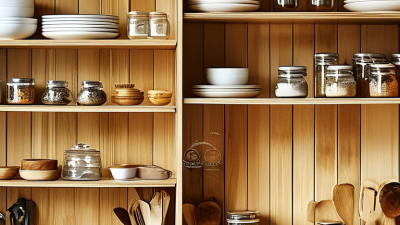
Wall-mounted spice racks are becoming practical choices for compact kitchens. They use vertical wall space instead of consuming drawers or worktops. Grand View Research estimates that the global kitchen storage market may grow at a 4.8% CAGR from 2024 to 2030. That trend reflects a clear demand for organized, space-efficient interiors.
A useful wall-mounted rack should hold common jar sizes, resist moisture, and allow quick label reading. In installation trials, racks positioned near the cooking zone reduced unnecessary movement. However, mounting height matters. A shelf placed too high becomes inconvenient and unsafe for daily use. Houzz’s 2024 U.S. Kitchen Trends Study reports that 76% of renovating homeowners upgraded their cabinets, showing how strongly storage affects kitchen planning. Still, cabinet upgrades alone may not solve scattered spice storage.
For global buyers, material selection deserves careful review. Powder-coated steel offers strength, while treated wood creates a warmer appearance. Removable trays help with cleaning, especially near oil and steam. Small details matter. Buyers should check wall fasteners, load ratings, corrosion resistance, and packaging protection before ordering. I have seen attractive racks fail because their screws suited drywall poorly. That is an easy mistake, but not a minor one. A slim two-tier rack may serve a small apartment better than a large decorative unit, even when the larger model looks more impressive.
Countertop Spice Racks for Easy Access and Flexible Placement
2026 Top Spice Rack Types for Global Buyers?
Countertop Spice Racks for Easy Access and Flexible Placement
A countertop spice rack keeps daily seasonings within reach during busy cooking. It works well beside a cutting board, stove, or food preparation area. Before buying, measure the available counter depth and the tallest spice container. A narrow rack may fit small kitchens better. A wider model can hold more jars but may block nearby workspace.
A Bamboo Spice Rack adds warmth and suits kitchens with wood, stone, or neutral surfaces. Bamboo is lightweight, renewable, and usually easy to move. However, it can absorb moisture if spills remain untreated. Wipe the surface quickly with a damp cloth, then dry it fully. Do not assume every bamboo rack has the same durability. Check joint strength, surface sealing, and shelf stability before placing glass jars.
Easy access depends on more than appearance. Tiered shelves help users read labels without lifting every container. Raised edges can reduce sliding when the counter is bumped. Adjustable sections support different jar sizes, though moving parts may loosen over time. I would test the rack with full jars before regular use. Small gaps can collect powder. That detail is easy to miss. Clear labeling also matters, especially when several seasonings have similar colors. Leave enough space around the rack for cleaning and safe hand movement.
Drawer and Pull-Out Spice Racks for Organized Hidden Storage
Drawer and Pull-Out Spice Racks for Organized Hidden Storage
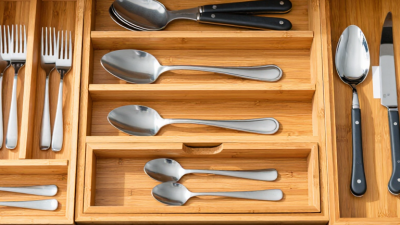
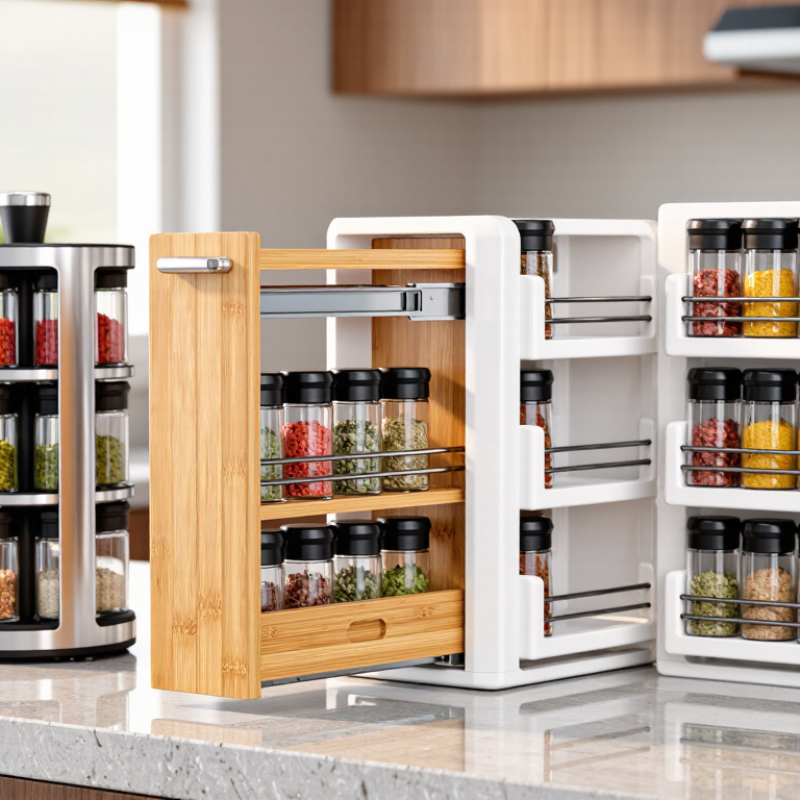
For global buyers, drawer and pull-out spice racks offer clean storage without crowding the worktop. They keep jars protected from sunlight, grease, and cooking splashes. In kitchen planning, I recommend checking cabinet depth before choosing a rack. A few millimeters can affect smooth movement. Measure the cabinet opening, internal height, and available clearance carefully. Shallow drawers suit everyday seasonings, while tall pull-outs can store larger containers. Labels should face upward or forward. That small detail saves time during busy cooking.
Tips: Use adjustable dividers for different jar sizes. Keep frequently used spices near the preparation area. Choose corrosion-resistant runners for humid kitchens. Test the rack with full jars before final installation. A soft-close mechanism feels refined, but it may increase the purchase cost.
A Rustic Spice Rack style can add warmth to modern kitchens, especially with wood-toned drawer fronts or matte metal details. However, appearance should not reduce access or cleaning ease. I once saw a beautiful narrow rack become frustrating because its shelves were too deep. Small jars disappeared behind larger ones. That design needed more reflection. Pull-out shelves solve this issue when each level remains visible. Buyers should also review weight capacity, runner quality, and replacement hardware availability. Reliable construction matters more than decorative details. A well-planned hidden rack keeps counters clearer and makes inventory easier to monitor.
Magnetic and Modular Spice Racks for Adaptable Kitchen Layouts
Magnetic and modular spice racks suit kitchens that change often. They attach to refrigerators, steel panels, or wall rails without permanent drilling. Grand View Research’s 2024 kitchen furniture analysis identifies space efficiency and flexible storage as important market drivers. That trend is visible in small apartments and shared homes.
Modular racks let buyers adjust shelf width, container height, and mounting position. A narrow rail can hold daily spices beside the cooktop. A deeper tray can store larger jars inside a cabinet. Strong neodymium magnets help, but load testing still matters. Buyers should check holding capacity, surface compatibility, and heat resistance. Stainless steel or coated metal usually performs better near steam and oil. Plastic may reduce weight, but it can age faster under heat.
Small details matter.
The 2024 Houzz U.S. Kitchen Trends Study reported that 76% of renovating homeowners upgraded cabinets, showing strong demand for better kitchen storage. However, cabinet trends do not prove every household needs magnetic accessories. Some painted surfaces may scratch, and crowded refrigerator doors can become inconvenient. A practical design should allow one-handed access, clear labels, and easy cleaning. Reports from modular kitchen research firms also point to continued growth in adaptable kitchen systems, although forecasts differ by region and product definition. That uncertainty deserves attention. Suppliers should offer replaceable modules, measurable load data, and installation guidance for different household layouts.
How Global Buyers Can Compare Materials, Capacity, and Durability
2026 Top Spice Rack Types for Global Buyers?
For global buyers, comparing a spice rack starts with its material, not its appearance. Stainless steel resists moisture and repeated cleaning, making it suitable for humid kitchens. Bamboo feels warm and light, but poor sealing may cause swelling near sinks. Food-grade plastic is affordable and easy to ship, although thin panels can flex under full jars. Glass offers visibility, yet it adds weight and breakage risk during transport.
Capacity should match real storage habits. Measure the cabinet width, depth, and door clearance before choosing an Expandable Spice Rack. Measure twice. A narrow model may hold twelve standard jars, while a tiered unit can hold twenty-four or more. Check shelf spacing with tall containers, not only sample bottles. Some suppliers publish maximum capacity, but not the usable capacity after labels and hand clearance. That difference matters. Not always.
Durability needs more than a strong first impression. Pull sliding parts repeatedly and inspect loose joints, rough edges, and unstable feet. For export orders, review carton protection, coating adhesion, and corrosion resistance after simulated humidity exposure. I have seen racks pass a simple weight test but wobble after repeated adjustment. Test it repeatedly. Ask for material specifications, load data, and batch inspection records. Also confirm cleaning instructions, because aggressive detergents can damage finishes faster than daily cooking. Small defects become expensive across a large shipment.
Smart Buying Criteria: Safety, Sustainability, Cost, and Market Fit
For global buyers, spice rack selection in 2026 should begin with use conditions, not appearance. A Wall Mounted Spice Rack can save counter space, yet poor anchoring may create a daily hazard. Check load capacity, mounting hardware, edge finishing, and resistance to kitchen humidity. Food-contact surfaces should be easy to clean and free from questionable coatings. Ask suppliers for material specifications, test reports, and batch traceability. These documents support inspection, but they cannot replace it.
Sustainability needs practical evidence. Prefer durable steel, responsibly sourced wood, or recycled content with clear percentages. Avoid designs that combine materials and become difficult to repair or recycle. Packaging should protect the rack without excessive foam. Low purchase prices can hide weak screws, peeling finishes, and frequent replacement. Compare landed cost, installation time, expected service life, and return risk. I have seen attractive racks fail because wall plugs did not match local wall types. That mistake was preventable.
Market fit depends on cooking habits and household layout. Narrow shelves suit small apartments, while deeper tiers help commercial kitchens and bulk storage. Removable containers support cleaning and refilling routines. Label visibility matters when several powders look similar. Buyers should test a sample in a real kitchen before placing a large order. Spreadsheet measurements can still miss hand clearance. Leave room for that lesson. Regional climate, language requirements, and preferred mounting methods may affect satisfaction more than color or novelty.
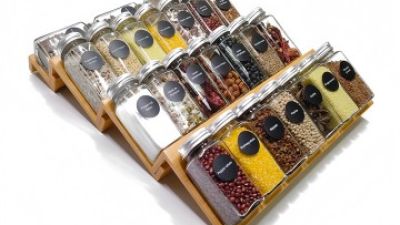
Expandable Bamboo Spice Rack Tray Drawer Organizer: A 4-in-1 Guide to Smarter Kitchen Storage
The Expandable Bamboo Spice Rack Tray Drawer Organizer combines four practical storage functions in one adaptable design. It works as a tiered spice rack, a spacious drawer organizer, an expandable tray, and a countertop display solution. Its adjustable structure fits different cabinet and drawer widths, helping make better use of compact kitchen spaces while keeping seasonings visible and easy to reach. When fully expanded, it can hold up to 64 spice jars, depending on jar size and arrangement.
Made from premium FSC-certified bamboo, this organizer brings a warm, natural look to modern kitchens while supporting more responsible material choices. The smooth surface is treated with a food-safe oiled finish, making it suitable for everyday kitchen storage and simple to wipe clean. The tiered layout helps prevent jars from being hidden behind one another, while the open tray design can also accommodate cooking oils, tea containers, condiments, or small kitchen accessories. For wholesale buyers, its versatile 4-in-1 format offers a practical solution for customers seeking flexible, space-saving organization without sacrificing appearance or accessibility.
FAQS
It keeps small containers visible, stable, and easy to reach while cooking. A tidy shelf helps.
Wall-mounted racks save counter space. They need secure installation and suitable wall support.
Yes. They rotate smoothly and provide quick access. Check that the base stays stable.
Measure cabinet width, depth, and door clearance. Also check shelf spacing and container height.
Match capacity with your real storage habits. A rack may hold twelve jars, but labels reduce usable space.
Stainless steel resists moisture and repeated cleaning. Sealed bamboo can work, but poor sealing may cause swelling.
Food-grade plastic is affordable and easy to ship. Thin panels may flex under full jars.
Review carton protection, coating adhesion, and corrosion resistance. Glass looks clear, but transport breakage remains a concern.
They can expand when households add new seasonings. Extra joints may collect dust or wobble.
Test it with full jars and repeated adjustments. Inspect loose joints, rough edges, unstable feet, and hand clearance. Not just appearance.
Conclusion
A Spice Rack is an essential kitchen storage solution designed to keep seasonings organized, visible, and easy to access. This article explores the main spice rack categories, including wall-mounted models that save counter space, countertop designs that provide flexible placement, and drawer or pull-out systems that create a neat hidden-storage solution. It also introduces magnetic and modular options, which can be adjusted to suit different kitchen layouts and changing storage needs.
For global buyers, selecting the right Spice Rack requires careful comparison of material quality, capacity, structure, and durability. Practical buying considerations include stable construction, safe and food-appropriate materials, easy cleaning, efficient use of space, and sustainable production choices. Buyers should also evaluate cost, packaging, transport requirements, and market preferences to ensure the product offers reliable performance and broad suitability across different regions.