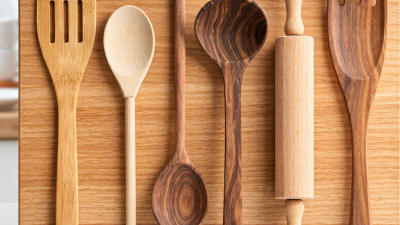
Picking a wooden kitchenware supplier in 2026 isn't just about drooling over those gorgeous product shots. Sure, that beechwood spoon might look perfect for your cozy family kitchen, but have you thought about what kind of wood it really is, or how it's finished, or where it came from? You've got to dig a little deeper. Ask your suppliers for the nitty-gritty details—material specs, care instructions, and make sure they keep consistent batch records. Honestly, these little things can make a big difference in the long run.
So, according to Grand View Research, the global kitchenware market was worth around $65.4 billion back in 2023, and it's projected to keep growing through 2030. That number covers all kitchenware, not just wooden stuff. Still, it's a clear sign that this is a pretty crowded market—buyers want solid proof, not just flashy claims. And speaking of proof, there's this wood scientist, Charles R. Frihart from the USDA Forest Products Lab, who's really dug deep into wood adhesives. You know, his research actually has a pretty clever sourcing takeaway: just ask yourself what's holding a product together, and how are its materials even documented? That's the gist of it. And hey, this is just my practical spin on his work, not a direct quote or any kind of product plug.
You know, when you're checking out samples, really take a close look. Are there rough edges? Uneven oiling? Loose joints? And watch out for vague wording like 'natural wood' – that's a red flag. Ask them to put it in writing: the exact wood species, the finish, production tolerances, and their quality control process. Then, go ahead and compare that sample against their actual records. Honestly, a really pretty sample can hide a messy paper trail. And that's something people often overlook.
So, if you're diving into supplier evaluation, this guide's got your back. You'll want to dig into things like how transparent they are about materials, their craftsmanship, production capacity, how they communicate, and the total cost. Let's face it – no supplier is perfect. The real trick is finding one who keeps their answers specific and clear even when you start asking the tough questions.

Before comparing suppliers, describe the product in practical terms. Is it a serving spoon, cutting board, or countertop organizer? Specify dimensions, wood type, expected use, finish, target price, and order volume. A board used for daily chopping needs different construction and care guidance from a decorative tray. Include details like acceptable color variation and the maximum gap between joined pieces. Small omissions here can become costly surprises later.
Request samples made to the proposed specification, not just attractive showroom pieces. Check the weight, surface smoothness, edges, odor, and finish after ordinary hand washing and drying. Wooden products can vary naturally; define which differences are acceptable instead of expecting every item to look identical. Ask for production lead times, minimum order quantities, defect handling, and written inspection criteria. If a company presents itself as a BRC certified kitchenware supplier, verify the certificate’s current status, scope, and relevant production site. Ask how wood sources and batch records are documented, too. I once underestimated packaging needs; the sample arrived safely, but its handle pressed against the carton. That was my miss. Specify protective packing and review a packed sample before approving a large run.
When comparing wooden kitchenware suppliers in 2026, look beyond polished product photos. Ask which species are used and where each item is intended to work. Maple is dense and fine-grained, while acacia often shows darker color variation. Beech can suit utensils, but finish and construction still matter. Wood varies. A sample may reveal more than a catalog.
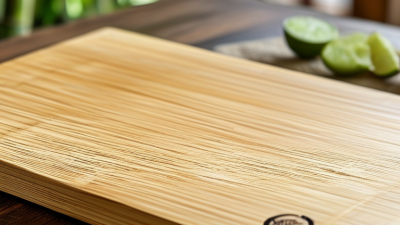
Check how handles meet heads, whether edges feel smooth, and if boards show cracks or uneven joins. Ask about the finish and care instructions; vague answers are a warning sign. A reliable supplier should explain how products are made and provide consistent specifications across samples and bulk orders. That said, visual checks alone cannot confirm durability. I’d want a clear process for addressing defects, too.
Compare the full range, not just one attractive spoon. Matching boards, spatulas, bowls, and storage pieces can simplify sourcing, but only if quality stays consistent. If you’re considering FSC certified bamboo kitchenware, remember bamboo is a grass, not a wood species; ask what the certification covers and request supporting documentation. Small details count: a board’s thickness, a utensil’s balance, and whether replacement pieces are available. Some suppliers make this harder to verify than it should be.
| Comparison area | Wood or product type | Useful characteristics | What to verify with a supplier | Buyer considerations |
|---|---|---|---|---|
| Wood species | Hard maple | A dense hardwood with a fine, generally even grain. Commonly used for cutting boards, utensils, and other kitchen items. | Ask for the precise species, country of origin, wood-drying process, and samples showing the grain and surface finish. | A light-colored, relatively consistent appearance suits many designs. Compare samples for color variation and visible end grain. |
| Wood species | Beech | A hardwood with a fine, usually straight grain; frequently used for utensils, boards, and kitchen tools. | Check that stock is properly dried and that finished items have smooth edges, clean joints, and no cracks or raised fibers. | Often provides a uniform, light-toned look. Ask how the supplier manages moisture changes during production and shipping. |
| Wood species | Acacia | A dense hardwood commonly used for boards, bowls, and serving pieces. Color and grain can vary between pieces and sources. | Request species and origin details, representative production samples, and the supplier’s grading criteria for color and grain variation. | Natural variation can be part of the appearance, but buyers should agree on acceptable variation before approving bulk orders. |
| Wood species | Teak | A durable hardwood containing natural oils; used in some kitchenware and serving products. | Ask for the exact species and documented sourcing information. Confirm the finish and care instructions for the intended use. | Oily wood can affect how finishes adhere. Check samples for finish consistency and confirm the supplier can substantiate any sustainability claims. |
| Wood species | Black walnut | A hardwood known for its brown tones and distinctive grain; used for boards, utensils, and serving items. | Review color and grain samples, confirm how sapwood and color variation are graded, and inspect cut edges and finished surfaces. | Its darker appearance can vary naturally. Specify the desired color range and whether contrasting light sapwood is acceptable. |
| Wood species | Olive wood | A hard wood valued for its distinctive, often irregular grain; commonly made into small utensils, bowls, and serving pieces. | Ask how the supplier selects and dries the stock, and inspect samples for cracks, knots, and consistency of finish. | Pronounced grain makes each item visually different. Confirm the supplier’s grading rules and replacement policy for natural defects. |
| Craftsmanship | Moisture control and stability | Wood responds to changes in moisture and can shrink, swell, or crack if it is not managed appropriately. | Ask about drying and storage practices, moisture checks, and how the supplier prevents warping before packing. | Request samples from the production process, not only hand-selected display pieces, and inspect them after unpacking. |
| Craftsmanship | Construction and finishing | Well-made products should have secure joints, smooth contact surfaces, and no loose parts, splinters, or rough edges. | Review production samples and written quality criteria. Confirm the finish is suitable for the product’s intended food-contact use and destination market. | Ask for clear care instructions, including whether hand washing is recommended. Check finish consistency across multiple items. |
| Product range | Boards and chopping blocks | Options may include different sizes, thicknesses, edge-grain construction, and end-grain construction. | Compare dimensions, construction details, edge treatment, packaging, and available customization. | Choose a supplier that can keep specifications consistent across repeat orders and clearly identify each construction type. |
| Product range | Utensils, bowls, and serving pieces | These products vary in shape, thickness, handle design, and suitability for particular kitchen tasks. | Check a representative range for balance, comfortable handling, smooth finishing, and consistent dimensions. | A broader range can simplify sourcing, but verify that each product has its own suitable material, finish, and care guidance. |
| Supplier verification | Traceability and documentation | Species names, origin information, and certification claims should be specific and supported by relevant documentation. | Request documents that match the actual species, source, product, and order. Verify certification scope and validity where certification is claimed. | Food-contact rules and import requirements vary by destination market; confirm applicable requirements before placing an order. |
Wood characteristics can vary by species, growing conditions, cut, and processing. Evaluate production samples and confirm specifications in writing before ordering.
A supplier’s experience shows in repeatable details, not a polished catalogue. Ask how many years they have made wooden utensils, which products run regularly, and how they handle warping, cracks, or uneven finishes. Request production records for a recent order, including monthly output, lead times, defect rates, and inspection steps. Ask for proof. A factory tour, even by video, can reveal whether drying racks are organized and whether finished pieces are checked under consistent lighting.
For Bamboo Kitchenware, capacity depends on stable material supply and controlled processing, not just the number of workers. INBAR’s 2018 Global Assessment of Bamboo and Rattan estimates that bamboo forests cover about 35 million hectares worldwide. That broad figure says little about a particular supplier’s access or traceability, so request origin details and batch records. FAO’s Global Forest Resources Assessment 2020 reports average annual net forest loss of 4.7 million hectares during 2010–2020; it is global context, not proof of a supplier’s impact. Compare a sample with a production batch, and check moisture-control methods, finish consistency, and packaging damage rates. I would not rely on one successful sample. It is easy to overlook how much quality can shift when orders grow.
Suggested evaluation weights—not market statistics. Ask suppliers for verifiable evidence, such as relevant product references, monthly capacity and current utilization, quality-control records, delivery performance, and contingency plans. Adjust the weights to suit your order size and sourcing requirements.
Verify Food Safety, Quality Standards, and Legal Compliance
A smooth finish is not proof of food safety. Ask suppliers to identify each wood species, coating, adhesive, and intended food contact. Request recent, product-specific test reports from a competent laboratory, including test methods and tested samples. Check that the reports match the item you plan to buy, not merely a similar product. Look closer.
Food safety deserves more than a supplier’s assurance. The World Health Organization estimates that unsafe food causes 600 million illnesses and 420,000 deaths worldwide each year, based on its 2015 global estimates. These figures concern foodborne disease overall, not wooden utensils specifically, but they show why contact materials matter. For sales in the European Union, review compliance with Regulation (EC) No 1935/2004; requirements differ by market and product. Ask for traceability records, batch identification, and written procedures for handling complaints or recalls. A certificate alone is not enough.
Inspect samples for splinters, open cracks, rough grain, and coatings that appear uneven or flake under normal use. Request documented quality checks for dimensions, moisture control, and finish consistency. Confirm that any claimed management-system certification is current and covers the relevant factory; it does not replace food-contact testing. I would still want to inspect a production sample, because paperwork can miss small defects. That extra check is easy to overlook.
When choosing wooden kitchenware suppliers in 2026, ask for a traceable path from forest to finished spoon. Request the wood species, harvest region, mill, and batch-level chain-of-custody records. FAO’s Global Forest Resources Assessment 2020 estimated that deforestation averaged 10 million hectares per year from 2015 to 2020. WRI’s 2024 Global Forest Review reported 3.7 million hectares of tropical primary forest loss in 2023. These figures do not prove a particular supplier’s wood is risky, but they make vague sourcing claims worth questioning.
Ask for documents you can match to an actual shipment: purchase records, species names, and certificates with valid scope and dates. Check whether the certificate covers the specific product and its processing sites, not just a supplier’s office. Ask how the supplier separates wood species and tracks offcuts or mixed batches. Paper is not proof. Compare records with sample labels, invoices, and product markings, then clarify any gaps in writing.
Transparency also includes adhesives, oils, and finishes that may contact food. Request material specifications and test reports relevant to the finished item, and ask who conducts the testing. A polished certificate can still leave gaps between factory and subcontractor. Even careful checks cannot guarantee perfect visibility; suppliers may have limited records for older stock. That uncertainty matters. Favor partners who disclose what they cannot verify and explain how they are improving traceability.
When comparing wooden kitchenware suppliers in 2026, look beyond the unit price. Ask for a quote that separates product cost, packaging, sampling, tooling, and freight. Check whether the quoted wood species, finish, and moisture level match the sample you tested. A low price can hide thinner boards or inconsistent sanding. That matters when spoons arrive with rough edges. Small detail. Request a dated quote and confirm how long it remains valid.
Lead times need the same scrutiny. UNCTAD’s Review of Maritime Transport 2024 reported that container freight rates rose sharply during 2024, including an increase of about 150% from October 2023 to June 2024. Shipping conditions can change landed costs, so compare production time and transit time separately. Ask suppliers to show recent on-time delivery records, not just their best-case schedule. A clear buffer helps, though it is easy to underestimate seasonal delays.
After-sales support reveals how a supplier handles imperfect batches. Agree in writing on response times, replacement terms, and evidence required for claims, such as photos of warped boards or chipped handles. Ask who pays for rework or replacement shipping. McKinsey’s 2024 supply-chain survey found that nine in ten respondents faced supply-chain challenges in the previous year, underscoring the value of practical contingency plans. For FSC certified kitchenware, verify the scope of the certificate and that it covers the relevant product or supply chain. Paperwork can look reassuring. Check it carefully.
A polished sample is useful, but it is only a first check. Ask for pieces made from the same wood species, finish, and process intended for bulk production. Inspect the grain, joints, edges, and surface coating under bright light. Run a clean cloth over the finish; rough spots or loose fibers may signal inconsistent sanding. Check dimensions with a ruler, then wash and dry the item as directed to see whether it warps, stains, or develops a lingering odor. One sample cannot predict every production issue.
Tips: Request several samples from different production runs if possible. Ask the supplier to explain wood selection, drying, finishing, and quality checks. Keep notes and dated photos, so you can compare later batches against an agreed reference. A small mismatch may be acceptable, but decide what is not before ordering.
Supplier reliability shows in clear, verifiable answers. Ask for written specifications, realistic lead times, inspection procedures, and a process for handling defects. You might also request a pre-shipment sample or inspection report for a larger order. Pay attention to how the supplier responds when you raise a concern: specific answers are more useful than broad promises. Still, good communication is not proof of consistent production. A sample can look excellent and hide a weak process; that is easy to overlook when deadlines are tight.
A well-organized entryway makes it easier to get out the door without searching for everyday essentials. A wooden docking station gives your phone and watch a dedicated place to rest and charge, keeping them together instead of scattered across a counter or nightstand. Built-in cable slots help guide charging cords neatly into place, while the watch stand keeps your wearable accessible and ready for the next day.
The thoughtful layout can also make room for more than electronics. Hang your glasses within easy reach, and tuck small accessories into the drawer to keep the surface clear. With a designated spot for each item, you can drop off what you carry when you arrive and find it again when you leave. The warm wooden finish adds a natural touch to an entryway, while the compact design helps make use of limited space.
Specify dimensions, wood type, finish, intended use, target price, and order volume. For a chopping board, also define acceptable color variation and gaps between joined pieces.
Request a sample made to your written specifications. Check its weight, smoothness, edges, odor, and finish after hand washing and drying. Look closely.
Ask about lead times, minimum order quantities, defect handling, and written inspection criteria. Approve a packed sample, too; a handle once pressed against my sample’s carton.
Ask for the wood species, coatings, and adhesives used. Request recent test reports for the exact product, with methods and sample details. A certificate alone is not enough.
Look for splinters, open cracks, rough grain, uneven coatings, and finishes that flake during normal use. Check dimensions and finish consistency as well.
Request the species, harvest region, mill, and batch-level records. Match documents to shipment details, sample labels, invoices, and product markings. Paper is not proof.
Confirm that each certificate is current and covers the relevant factory, product, and processing sites. It does not replace product-specific testing.
Ask how they track mixed batches, offcuts, oils, and finishes. Prefer suppliers who clearly state what they cannot verify and how they plan to improve. Some gaps may remain.
Choosing the right Wooden Kitchenware supplier in 2026 starts with clearly defining the products you need, your target customers, and the quality and customization requirements that matter most. Compare available wood species, finishing methods, craftsmanship, and product range to determine whether a supplier can meet your expectations. Consider the supplier’s experience, production capacity, and ability to maintain consistent quality as your order volume changes.
Before making a commitment, verify that products meet relevant food-safety and quality standards, and ask for clear information about materials and supply-chain practices. Compare pricing alongside lead times, communication, and after-sales support rather than choosing on cost alone. Finally, request samples to assess durability, finish, and workmanship firsthand. A reliable supplier should answer questions clearly, provide consistent documentation, and demonstrate that it can deliver the products and service you need over time.