Leave Your Message
0%

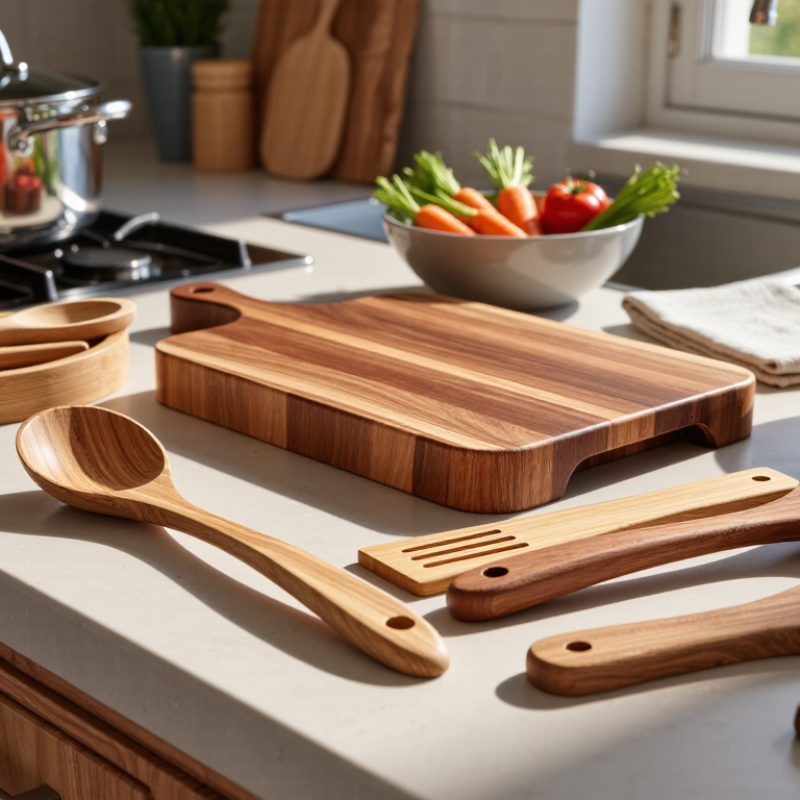
Picking out wooden kitchen tools isn’t just about comparing shapes, prices, or show-off-worthy grain patterns. Honestly, a good wooden spoon should feel just right—balanced, smooth, and comfortable to hold, especially when you’re stirring it over and over. And a cutting board? It should resist those pesky deep knife marks and stay steady on your counter. Sometimes, those small details tell you way more about the craftsmanship than glossy pictures ever could. In this guide, I’ll walk you through things like different wood types, how tools are built, finishes, how long they last, how to care for them, and safety for everyday use. We’ll also think about how these tools handle hot pans, wet sinks, or busy chopping sessions. Basically, how they perform in real life.

Material really matters here. Things like hard maple, beech, walnut, and bamboo all bring their own feel, weight, and care needs to the table. Bamboo is usually light and eco-friendly, but beware—laminated bamboo can vary between brands. Hardwood tools can last ages if you’re gentle when cleaning, dry them quickly, and occasionally treat them with food-safe mineral oil. And don’t assume every wooden piece is dishwasher safe—seriously, always check those care instructions. Also, watch out for claims like “natural”—that doesn’t automatically mean stronger or safer. Even the most seasoned buyers sometimes miss things like hidden glue seams, rough edges, or rough finishing. I’ve been there myself. The best choice combines trusted materials, practical design, clear care guides, and honest reviews from other users. This guide aims to help you ask smarter questions before making a purchase, and here’s a truth you gotta accept—wood changes over time, affected by moisture and use. It’s part of the charm, really.
What Are Wooden Kitchen Tools A Buyers Guide?

Define Wooden Kitchen Tools by Material, Function, and Food-Contact Use

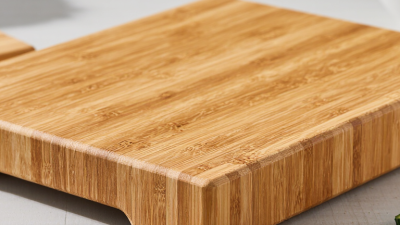
Wooden kitchen tools should be defined by material before appearance. Hardwood tools, such as maple or beech, usually resist dents and hold their shape well. Bamboo is technically a grass, not a tree. It is often laminated into boards and utensils. That construction can be strong, but exposed seams deserve inspection. Look for a smooth surface, tight grain, and no deep splits. Dark, decorative wood is not automatically better.

Function changes the best choice. A broad wooden spoon suits stirring thick soups and sauces. A thin spatula works better under eggs or delicate vegetables. A rolling pin needs balanced weight and a comfortable grip. For cutting boards, end-grain wood can absorb knife impact, while edge-grain boards may be easier to maintain. I once bought a beautiful board that warped near the sink. It looked excellent. It performed poorly.

Food-contact use requires more than a pleasant finish. Choose tools clearly described for food preparation, with a non-toxic, cured finish suitable for that purpose. Avoid utensils with flaking coatings, open cracks, or rough fibers. Wash them by hand with mild soap, then dry them upright or on a rack. Do not soak them or place them in a dishwasher. Conditioning oil may help dry wood, but only use one intended for food-contact surfaces. A small warning matters: “natural” does not always mean hygienic or durable. I still check care instructions, because wood varies more than product photos suggest.

Compare Maple (1,450 lbf) and Beech (1,300 lbf) by Janka Hardness

When choosing wooden kitchen tools, hardness affects how they feel during daily cooking. Janka hardness measures the force needed to press a steel ball into wood. It is reported in pounds-force, or lbf.

Maple measures about 1,450 lbf, making it the harder option. It resists dents from knives, pots, and repeated stirring. A maple spoon often feels firm when scraping a thick sauce. Beech measures around 1,300 lbf, so it is slightly softer. However, that difference is modest in ordinary kitchen use. Beech tools can still handle frequent stirring, chopping, and serving when properly maintained.

Hardness is not the whole decision. I have used firm wooden utensils that still developed rough patches after poor drying. Grain direction, moisture, finish, and manufacturing quality also influence service life. Maple may suit cooks who want a more resistant cutting board or sturdy spatula. Beech can feel more forgiving in the hand and may be easier to shape smoothly. It is a practical choice for spoons and lighter utensils.

Check the surface carefully. It should feel smooth, without deep cracks or raised splinters. Wash wooden tools by hand, dry them upright, and avoid prolonged soaking. Occasional food-safe oil can reduce dryness, although oil cannot repair severe damage. Janka ratings provide useful evidence, but they do not replace inspection. Even the harder wood can fail when neglected.

Check Food-Safe Finishes Against FDA 21 CFR 172.878 Requirements

Wooden kitchen tools look simple, but their finish deserves careful attention. A cutting board may hold oil near knives, vegetables, and wet hands every day. For food contact, check whether the finish uses white mineral oil meeting the specifications in FDA 21 CFR 172.878. This section permits specific white mineral oil uses, but it does not automatically approve every bottle labeled “food-safe.” Read the technical documentation. Confirm the intended contact conditions. Surface claims alone can be vague.

A practical buying mistake is trusting “natural” language without checking the actual ingredients. Plant oils may become sticky, rancid, or darken the wood. Some coatings also contain additives that require separate compliance information. Choose a finish with clear food-contact instructions, batch details, and curing guidance. Apply only as directed. A thin, even coat usually works better than a glossy flood. The wood should feel dry, not greasy, before use. I would still recheck the documentation when the product changes. Labels are not always perfectly consistent.

Tips: Look for “white mineral oil” and a specific reference to 21 CFR 172.878. Ask the seller for compliance details if the label is unclear. Avoid finishes with unknown solvents, fragrances, or decorative pigments. Test a small area first. Then wash, dry, and inspect the surface after several uses. Scratches and raised grain can trap moisture. Even a compliant finish cannot replace proper cleaning, drying, and regular maintenance.

Wooden Kitchen Tools: Food-Safe Finish Buyer’s Guide

21 CFR 172.878 specifically regulates white mineral oil for permitted food uses and requires it to comply with the specifications in 21 CFR 178.3620(b). Other finishes shown below are not specifically covered by 21 CFR 172.878; this does not automatically mean they are unsafe, but buyers should verify the applicable food-contact requirements for the complete formulation and intended use.

Assess Wood Moisture Content: Target 6–8% to Reduce Warping Risk

When buying wooden Cooking Tools, moisture content deserves careful attention. For indoor kitchens, a reading between 6 and 8 percent usually indicates stable, well-conditioned wood. This range can reduce warping, splitting, and unexpected movement after purchase. Lower is not always better. Over-dry wood may absorb humid air quickly, creating stress around joints, handles, or thin edges.

I check moisture with a calibrated meter when possible. Press the pins into several areas, not only the smooth surface. Read near the handle, center, and end grain. Avoid relying on one measurement. Different wood species can produce slightly different readings, and regional humidity changes the ideal target. That detail is easy to overlook. A kitchen tool should also feel dry, balanced, and free from raised grain. I leave new utensils in my kitchen for several days before heavy use. If a board or spoon arrives cold and tightly packaged, I let it acclimate gradually. This small pause can reveal movement before washing or cooking begins.

One honest limitation: a moisture meter only samples selected points. It cannot guarantee perfect internal stability. Still, readings near 6–8 percent provide useful evidence when combined with straight grain and careful construction. Look closely. Slight bowing, hairline cracks, or rough end grain may signal poor conditioning, even when the displayed number appears acceptable.

What Are Wooden Kitchen Tools? A Buyer’s Guide: Assess Wood Moisture Content
Buying Dimension Practical Benchmark Why It Matters What Buyers Should Check
Wood moisture content Target: 6–8% for wooden tools intended for typical indoor kitchens. Wood continually gains or loses moisture until it reaches equilibrium with its surroundings. Excess moisture increases the risk of shrinkage, cracking, splitting, and warping after purchase. Ask for a moisture-meter reading taken from the finished tool, not only from the raw lumber. Compare readings from several areas when possible.
Reading consistency Readings should be reasonably uniform across the handle, bowl, blade, or head. A large variation may indicate uneven drying. Uneven moisture distribution can create internal stress as the tool dries in a home environment. Check the center and end grain where accessible. Avoid pieces with visibly wet-feeling areas, fresh discoloration, or pronounced moisture differences.
Wood movement risk Higher risk: thick, wide, flat pieces with changing grain direction.
Lower risk: well-seasoned, evenly constructed pieces.
Wood expands and contracts primarily across the grain. Wider components generally show more visible movement than narrow components. Look for straight construction, stable proportions, and no gaps around joined parts. Small natural movement is normal; twisting and open joints are warning signs.
Grain orientation For cutting boards and broad wooden surfaces, end-grain and well-aligned face-grain construction can help manage wear and movement. Grain direction affects durability, dimensional movement, and resistance to repeated knife contact. Inspect the grain rather than relying only on appearance. Avoid severe runout, deep knots, or grain interruptions in high-stress areas.
Surface condition Surface should be smooth, free from splinters, and without deep checks, open cracks, or rough tool marks. Cracks can trap food residue and water. Rough surfaces are more difficult to clean and may worsen with repeated washing. Run a clean fingertip lightly over the surface. Reject tools with sharp splinters, deep fissures, or loose fibers.
Finish suitability Use a food-contact finish that is fully cured and appropriate for wooden kitchenware. Many unfinished tools are maintained with food-safe drying oils or waxes. A suitable finish can reduce rapid moisture exchange, but it cannot eliminate normal wood movement or compensate for poorly dried timber. Check the care instructions and finish description. Avoid strong chemical odors, sticky surfaces, or coatings that are peeling or flaking.
Tool thickness and balance Choose a thickness appropriate to the task, with a comfortable, balanced handle and no excessive flexing. Very thin sections can dry quickly and deform more easily, while poorly balanced tools may be uncomfortable or unsafe to use. Hold the tool as it would be used. Check that the handle is firmly attached and that the working end does not wobble.
Moisture exposure after purchase Keep the tool dry between uses; do not soak it or leave it submerged. Hand-wash and dry promptly unless the care instructions state otherwise. Repeated soaking and uneven drying accelerate swelling, shrinkage, surface roughness, and joint failure. Prefer tools with clear washing instructions. Avoid products that require prolonged soaking or are marketed as suitable for dishwashers without supporting care guidance.
Storage environment Store in a ventilated indoor area away from direct heat, radiators, ovens, and prolonged sunlight. Rapid temperature and humidity changes can create moisture gradients that increase cracking and warping risk. Choose a storage location with normal indoor conditions. Do not store wet tools in drawers, sealed containers, or against a hot appliance.
Ongoing maintenance Reapply an appropriate food-contact conditioning product when the surface looks dry, pale, or rough, following the product instructions. Periodic conditioning helps reduce rapid moisture exchange and maintain surface feel, although it does not replace proper drying. Look for maintenance guidance covering cleaning, drying, conditioning frequency, and when to retire a cracked or severely warped tool.
Buyer’s decision rule Prefer: 6–8% moisture content, even readings, intact grain, smooth surfaces, and clear care instructions. These factors together provide a more useful assessment than wood appearance alone. Avoid: unverified moisture claims, visible cracks, loose joints, severe warping, persistent dampness, or unclear food-contact and care information.
Note: Moisture readings can vary with wood species, tool thickness, measurement method, indoor climate, and meter calibration. The 6–8% target is a practical benchmark for many indoor kitchen applications, not a guarantee that a tool will never move.

Match Tool Design to Tasks: 3–5 mm Edges and Ergonomic Handles

What Are Wooden Kitchen Tools A Buyers Guide?

Wooden kitchen tools should match the task, not only the décor. For slicing, scraping, or turning dough, a 3–5 mm working edge offers useful control. Thicker edges feel clumsy around delicate food. Very thin edges can split or bruise easily. I have tested both. The middle range usually feels safer, although wood species and moisture change performance.

Handle design matters just as much. NIOSH ergonomic guidance connects awkward wrist angles, repeated force, and contact pressure with musculoskeletal strain. The Bureau of Labor Statistics recorded over 1.1 million private-industry cases involving days away, restricted work, or transfer in 2023. That figure covers all occupations, not kitchens, but it reinforces a practical point: reduce unnecessary effort. Choose handles that fill the palm without forcing a tight grip. A softly rounded cross-section helps during long stirring sessions. Avoid sharp ridges near the thumb.

Pizza Oven Tools need extra attention. A peel or turning paddle should balance near the hand, not pull the wrist downward. For a wooden scraper, keep the edge straight and inspect it after every high-heat use. The U.S. Food Code emphasizes cleanable, smooth food-contact surfaces, so deep cracks are a clear replacement signal. I sometimes prefer a slightly heavier tool for stiff dough. That preference is not universal. Smaller hands may need lighter tools, and ergonomic advice cannot replace real testing. Hold the tool, mimic the motion, and notice where pressure builds.

Evaluate Cleaning Limits: Hand-Wash Below 60°C and Dry Thoroughly

When comparing wooden kitchen tools, cleaning limits deserve more attention than appearance. Wood can absorb water, oils, and food particles through small surface pores. I recommend hand-washing each spoon, spatula, or coffee scoop below 60°C. Use warm water, mild detergent, and a soft brush. Avoid aggressive scrubbing.

Do not leave wooden tools submerged. A few minutes is usually enough. Rinse away soap, then dry every surface thoroughly with a clean towel. Place the tool in an airy area, not inside a closed drawer. Trapped moisture may encourage odors, swelling, or fine cracks. Heat also matters. Dishwashers and very hot water can weaken wooden fibers and damage protective finishes.

I once left a wooden coffee paddle beside a wet sink overnight. It looked acceptable, but the handle felt rough the next morning. That small mistake changed my storage routine. For buyers comparing wholesale barista tools, check whether care instructions clearly state the washing temperature and drying method. Also inspect the grain, handle joints, and finish before purchase. A smooth surface is easier to clean, but it does not make the tool maintenance-free. Different wood species behave differently, and factory finishing is not always consistent. When a tool develops deep cracks, persistent odor, or splintering, replacing it is safer than repeatedly treating the surface.

Verify Sustainability Claims Through FSC Certification and Traceability

Wooden kitchen tools can look natural, but appearance does not prove responsible sourcing. A smooth spoon may come from certified timber, recycled wood, or an undocumented supply chain. The Food and Agriculture Organization’s Global Forest Resources Assessment 2020 reported that approximately 420 million hectares of forest were lost between 1990 and 2020. That figure makes traceability more than a marketing detail.

Look for an FSC label and verify its certificate number through the certification database. FSC certification connects forest management, processing, and distribution through documented Chain of Custody records. This process helps confirm that the wood in a cutting board or spatula came from an approved source. Ask whether the certificate covers the specific product, not merely the manufacturer’s facility. Small details matter.

Bamboo Cooking Tools also require careful checking. Bamboo grows quickly, yet “renewable” does not automatically mean responsibly harvested. Confirm the material, origin, and certification scope. A supplier should explain whether the handle, finish, and packaging follow the same claim. The FSC Annual Report 2023 states that FSC-certified forests cover more than 160 million hectares globally, showing the system’s broad industry reach. Still, certification is not perfection. Documents can be misunderstood, and mixed materials complicate claims. Recheck vague wording before buying.

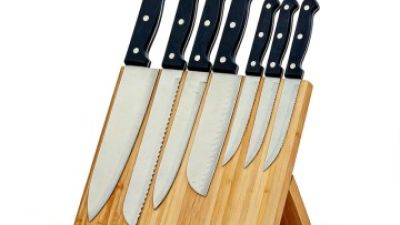
Foldable Magnetic Bamboo Knife Holders: A Space-Saving Guide to Stylish Kitchen Organization

Foldable magnetic bamboo knife holders offer a practical answer to modern kitchen organization, where countertop space is often limited. The 2024 U.S. Kitchen Trends Study by Houzz reported that specialty storage remains a priority for renovating homeowners, with roughly three-quarters incorporating organizational features into upgraded cabinetry. A vertical knife board supports this trend by displaying steel knives safely while keeping drawers and work surfaces uncluttered. Its foldable support stand also allows the holder to be stored flat when extra counter space is needed.

Crafted from responsibly selected bamboo, this knife board combines a warm natural appearance with functional durability. Powerful internal magnets hold compatible steel knives securely against the surface, reducing contact with crowded drawers and helping users identify the right tool quickly. The open display encourages better visibility and easier cleaning around the knife area, while the bamboo construction adds a refined, contemporary touch to both residential and professional kitchens.

Designed by experienced suppliers and available for personal or wholesale orders, the board is suitable for compact apartments, family kitchens, cooking schools, and hospitality settings. The International Bamboo and Rattan Organisation describes bamboo as a rapidly renewable material, supporting its growing use in lower-impact household products. With a space-saving folding format, hygienic magnetic storage, and sustainable styling, this knife holder turns everyday organization into an attractive part of the kitchen design.

FAQS

What does Janka hardness measure in wooden kitchen tools?

It measures the force needed to press a steel ball into wood. The rating uses pounds-force, or lbf. Higher numbers usually indicate better dent resistance.

Which wood is harder, maple or beech?

Maple measures about 1,450 lbf. Beech measures around 1,300 lbf. Maple may resist dents from knives, pots, and thick sauces slightly better.

Is beech suitable for frequent kitchen use?

Yes. Beech can handle regular stirring, chopping, and serving. Its slightly softer feel may feel more forgiving in the hand. That difference is modest.

Does hardness determine a tool’s entire service life?

No. Grain direction, moisture, finish, and manufacturing quality also matter. Even hard wood can develop rough patches after poor drying. I once underestimated that detail.

How should wooden kitchen tools be washed?

Hand-wash them below 60°C. Use warm water, mild detergent, and a soft brush. Avoid aggressive scrubbing. A few minutes is usually enough.

Why should wooden tools not remain submerged?

Wood can absorb water through tiny surface pores. Long soaking may cause swelling, odors, or fine cracks. Do not leave them beside a wet sink overnight.

How should wooden utensils be dried and stored?

Rinse away soap, then towel-dry every surface. Store tools upright in an airy place. Avoid closed drawers while moisture remains. Airflow helps.

When should a wooden tool be replaced?

Replace it when deep cracks, persistent odors, or splintering appear. Food-safe oil may reduce dryness, but it cannot repair severe damage. Inspection still matters.

Conclusion

Wooden Kitchen Tools are practical food-contact utensils made from carefully selected wood and designed for tasks such as stirring, turning, serving, and preparation. A useful buying guide should compare material performance as well as comfort. Maple, with a Janka hardness of approximately 1,450 lbf, offers slightly greater resistance to dents than beech at around 1,300 lbf. Look for smooth surfaces, ergonomic handles, and task-appropriate edges measuring roughly 3–5 mm. The wood should also have a moisture content of about 6–8% to help reduce warping and cracking during use.

Safety and maintenance are equally important. Choose finishes confirmed as suitable for food contact and checked against the relevant FDA 21 CFR 172.878 requirements. Wooden tools should generally be hand-washed below 60°C, never left soaking, and dried thoroughly to protect their shape and surface. For a more responsible purchase, verify sustainability statements through FSC certification and clear material traceability, rather than relying on vague environmental claims.

Emily

Emily

Emily is a dedicated marketing professional at Xiangtan Hundred Houseware Co., Ltd., a leading manufacturer specializing in bamboo and wood houseware products. With a wealth of experience in the industry, she possesses exceptional expertise in the company’s offerings, ensuring that each product......
Previous China Top 10 Bamboo Chopping Block Manufacturers?